Dangerous Errors
Podcast Posts Presentations Synthwave About
  • Cross-Site Tracing (XST): The Misunderstood Vulnerability May 18, 2010

    In January 2003 Jeremiah Grossman disclosed a technique to bypass the HttpOnly1 cookie restriction. He named it Cross-Site Tracing (XST), unwittingly starting a trend to attach "cross-site" to as many web-related vulns as possible.

    Unfortunately, the "XS" in XST evokes similarity to XSS (Cross-Site Scripting) which often leads to a mistaken belief that XST is a method for injecting JavaScript. (Thankfully, character encoding attacks have avoided the term Cross-Site Unicode, XSU.) Although XST attacks rely on JavaScript to exploit the flaw, the underlying problem is not the injection of JavaScript. XST is a technique for accessing headers normally restricted from JavaScript.

    Confused yet?

    First, let's review XSS and HTML injection. These vulns occur because a web app echoes an attacker's payload within the HTTP response body -- the HTML. This enables the attacker to modify a page's DOM by injecting characters that affect the HTML's layout, such as adding spurious characters like brackets (< and >) and quotes (' and ").

    Cross-site tracing relies on HTML injection to craft an exploit within the victim's browser, but this implies that an attacker already has the capability to execute JavaScript. Thus, XST isn't about injecting <script> tags into the browser. The attacker must already be able to do that.

    Cross-site tracing takes advantage of the fact that a web server should reflect the client's HTTP message in its respose.2 The common misunderstanding of an XST attack's goal is that it uses a TRACE request to cause the server to reflect JavaScript in the HTTP response body that the browser would then execute. In the following example, the reflection of JavaScript isn't the real vuln -- the server is acting according to spec. The green and red text indicates the response body. The request was made with netcat.
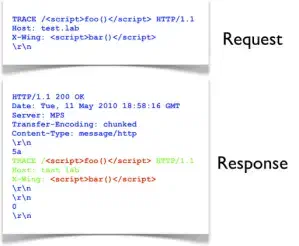
    Cross-site tracing request and response

    The reflection of <script> tags is immaterial (the RFC even says the server should reflect the request without modification). The real outcome of an XST attack is that it exposes HTTP headers normally inaccessible to JavaScript.

    To reiterate: XST attacks use the TRACE (or synonymous TRACK) method to read HTTP headers that are otherwise blocked from JavaScript access.

    For example, the HttpOnly attribute of a cookie prevents JavaScript from reading that cookie's properties. The Authentication header, which for HTTP Basic Auth is simply the Base64-encoded username and password, is not part of the DOM and not directly readable by JavaScript.

    No cookie values or auth headers showed up when we made the example request via netcat because we didn't include any. Netcat doesn't have the internal state or default headers that a browser does. For comparison, take a look at the server's response when a browser's XHR object makes a TRACE request. This is the snippet of JavaScript:

    var xhr = new XMLHttpRequest();
    xhr.open('TRACE', 'https://test.lab/', false);
    xhr.send(null);
    if(200 == xhr.status)
        alert(xhr.responseText);
    

    The following image shows one possible response. (In this scenario, we've imagined a site for which the browser has some prior context, including cookies and a login with HTTP Basic Auth.) Notice the text in red. The browser included the Authorization and Cookie headers to the XHR request, which have been reflected by the server:

    XST headers {: class="img-center" width="300px" height="218px" }

    Now we see that both an HTTP Basic Authentication header and a cookie value appear in the response text. A simple JavaScript regex could extract these values, bypassing the normal restrictions imposed on script access to headers and protected cookies. The drawback for attackers is that modern browsers (such as the ones that have moved into this decade) are savvy enough to block TRACE requests through the XMLHttpRequest object, which leaves the attacker to look for alternate vectors like Flash plug-ins (which are also now gone from modern browsers).

    This is the real vuln associated with cross-site tracing -- peeking at header values. The exploit would be impossible without the ability to inject JavaScript in the first place3. Therefore, its real impact (or threat, depending on how you define these terms) is exposing sensitive header data. Hence, alternate names for XST could be TRACE disclosure, TRACE header reflection, TRACE method injection (TMI), or TRACE header & cookie (THC) attack.

    We'll see if any of those actually catch on for the next OWASP Top 10 list.


    1. HttpOnly was introduced by Microsoft in Internet Explorer 6 Service Pack 1, which they released September 9, 2002. It was created to mitigate, not block, XSS exploits that explicitly attacked cookie values. It wasn't a method for preventing html injection (aka cross-site scripting or XSS) vulns from occurring in the first place. Mozilla magnanimously adopted in it FireFox 2.0.0.5 four and a half years later. ↩︎

    2. Section 9.8 of the HTTP/1.1 RFC. ↩︎

    3. Security always has nuance. A request like TRACE /<script>alert(42)</script> HTTP/1.0 might be logged. If a log parsing tool renders requests like this to a web page without encoding it correctly, then HTML injection once again becomes possible. This is often referred to as second order XSS -- when a payload is injected via one application, stored, then rendered by a different one. ↩︎
  • At about this time... May 8, 2010

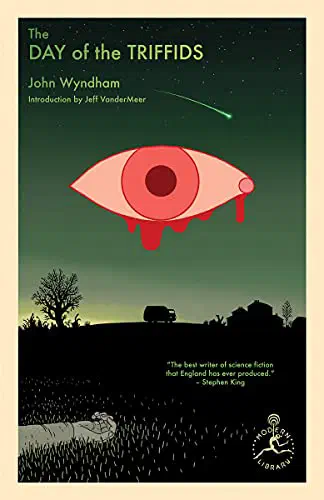
    The Day of the Triffids cover

    When a day that you happen to know is Wednesday starts off by sounding like Sunday, there is something seriously wrong somewhere.

    Bill Masen's day only worsens as he tries to survive the apocalyptic onslaught of ambling, venomous plants.

    John Wyndham's The Day of the Triffids doesn't feel like an outdated menace even though the book was published in 1951.

    It starts as the main character, Bill Masen, awakens in a hospital with his eyes covered in bandages. It's a great hook that leads to a brief history of the triffids while also establishing an unease from the start. The movie 28 Days Later uses an almost identical method to bring both the character and audience into the action.

    I love these sorts of stories. Where Cormac McCarthy's The Road focuses on the harshness of personal survival and meaning after an apocalypse, Triffids considers how a society might try to emerge from one.

    The 1981 BBC series stays very close the book's plot and pacing. Read the book first, as the time-capsule aspect of the mini-series might distract you -- 80s hair styles, clunky control panels, and lens flares.

    But if you're a sci-fi fan who's been devoted to Doctor Who since the Tom Baker era (or before), you'll feel right at home in the BBC's adaptation.

  • Is a vuln without a useful exploit still a vuln? May 7, 2010

    Here's a case where a page has one of the simplest types of XSS vulns: A server echoes the querystring verbatim in the HTTP response. The payload shows up inside an HTML comment labeled "Request Query String". The site's developers claim the comment prevents XSS because browsers will not execute the JavaScript, as below:

    <!-- _not gonna' happen_ -->
    

    One exploit technique would be to terminate the comment opener with " -->" (space dash dash >). Use netcat to make the raw HTTP request (for some reason, though likely related to the space, the server doubles the payload1):

    $ echo -e "GET /nexistepas.cgi? --> HTTP/1.0\r\nHost: vuln.site\r\n" | nc vuln.site 80 | tee response.html
    ...
    <!-- === Request URI: /abc/def/error/404.jsp -->
    <!-- === Request Query String: pageType=error&emptyPos=100&isInSecureMode=false& --> --> -->
    <!-- === Include URI: /abc/def/cmsTemplates/def_headerInclude_1_v3.jsp -->
    ...
    

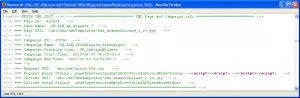
    You can confirm this works by viewing the HTML source in Mozilla to see its syntax highlighting pick up the tags (yes, you could just as easily pop an alert window).

    html injection

    The server is clearly vulnerable to XSS because it renders the exact payload. The HTML comments were a poor countermeasure because they could be easily closed by including a few extra characters in the payload. This also shows why I prefer the term HTML injection since it describes the underlying effect more comprehensively.

    However, there's a major problem of effective exploitability: The attack uses illegal HTTP syntax.2 Though the payload works when sent with netcat, a browser applies URL encoding to the payload’s important characters, thereby rendering the it ineffective because the payload loses the literal characters necessary to modify the HTML:

    https://vuln.site/nexistepas.cgi? -->
    ...
    <!-- === Request URI: /abc/def/error/404.jsp -->
    <!-- === Request Query String: pageType=error&emptyPos=100&isInSecureMode=false&%20--%3e%3cscript%3e%3c/script%3e -->
    <!-- === Include URI: /abc/def/cmsTemplates/def_headerInclude_1_v3.jsp -->
    ...
    

    I tried Mozilla’s XMLHttpRequest object to see if it might subvert the encoding issue, but didn’t have any luck. Browsers are smart enough to apply URL encoding for all requests, thus defeating this possible trick:

    var req = new XMLHttpRequest();
    req.open('GET', 'https://vuln.site/nexistepas.cgi? --><scri' + 'pt></s' + 'cript>', false);
    req.send(null);
    ...
    

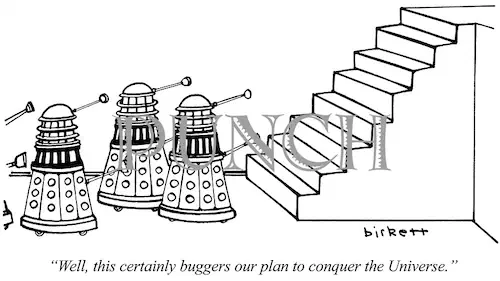
    The developers are correct to claim that HTML comments prevent <script> tags from being executed, but that has nothing to do with protecting this web site. It's like saying you can escape Daleks by using the stairs -- they'll just level the building.

    Punch cartoons by Peter Birkett

    Punch cartoons by Peter Birkett

    The page's only protection comes from the fact that browsers will always encode the space character. If the page were to decode percent-encoded characters or there was a way to make the raw request with a space, then the page would be trivially exploited. The real solution for this vuln is to apply HTML encoding or percent encoding to the querystring when it's written to the page.

    Set aside whether the vuln is exploitable or not. The 404 message in this situation clearly has a bug. Bugs should be fixed.

    The time spent arguing over risks, threats, and feasibility far outweighs the time required to create a patch. If the effort of pushing out a few lines of code cripples your development process, then it's probably a better idea to put more effort into figuring out why the process is broken.

    Notice that I didn't mention the timeline for the patch. The release cycle might require a few days or a few weeks to validate the change. On the other hand, if minor changes cause panic about uptime and require months to test and apply, then you don't have a good development process -- and that's something far more hazardous to the app's long-term security.


    1. Weird behavior like this is always interesting. Why would the querystring be repeated? What implications does this have for other types of attacks? ↩︎

    2. Section 5.1 of RFC 2616 specifies the format of a request line must be as follows (SP indicates whitespace characters): Request-Line = Method SP Request-URI SP HTTP-Version CRLF Including spurious space characters within the request line might elicit errors from the web server and is a worthy test case, but you'll be hard-pressed to convince a standards-conformant browser to include a space in the URI. ↩︎

  • Of the 2010 OWASP Top 10, Only 3 Not Common, Only 1 Hard To Detect Apr 22, 2010
    Letter O

    One curious point about the new 2010 OWASP Top 10 Application Security Risks is that only 3 of them aren't common. The “Weakness Prevalence” for each of Insecure Cryptographic Storage (A7), Failure to Restrict URL Access (A8), and Unvalidated Redirects and Forwards (A10) is rated uncommon. That doesn't mean that an uncommon risk can't be a critical one. These three items highlight the challenge of producing a list with risks that often lack context.

    Risk is difficult to quantify. The OWASP Top 10 includes a What’s My Risk? section with guidance on how to interpret the list. That guidance is based on the experience of people who perform penetration tests, code reviews, and research web security.

    The Top 10 rates Insecure Cryptographic Storage (A7) as an uncommon prevalence and difficult to detect. One of the reasons it’s hard to detect is that datastores can’t be reviewed by external scanners nor can source code scanners identify these problems other than by indicating misuse of a language’s crypto functions. Thus, one interpretation is that insecure crypto is uncommon because more people haven’t discovered such problems. Yet not salting a password hash is one of the most egregious mistakes a dev can make while also being one of the easier problems to fix. The practice of salting password hashes has been around since Unix epoch time was in single digits.

    It's also interesting that insecure crypto is the only one on the list that's rated difficult to detect. Conversely, Cross-Site Scripting (A2) is "very widespread" and "easy" to detect. But maybe it's very widespread because it's so trivial to find. People might simply choose to search for vulns that require minimal tools and skill to identify. On the other hand, XSS might be very widespread because it's not easy to find in a way that scales with large apps or complex workflows in apps. Of course, this also assumes someone's looking for it in the first place.

    Broken Authentication and Session Management (A3) covers brute force attacks against login pages. It's an item whose risk is too-often demonstrated by real-world attacks. In 2010 the Apache Foundation suffered an attack that relied on brute forcing a password. Apache’s network had a similar password-related intrusion in 2001. (I mention these because of the clarity of their postmortems, not to insinuate that the Apache foundation inherently insecure.) In 2009, another password guesser found happiness with Twitter.

    Knowing an account's password is the best way to steal a user’s data and gain unauthorized access to a site. The only markers for an attacker using valid credentials are behavioral patterns -– time of day, duration of activity, geographic source of the connection, and so on. The attacker doesn’t have to use any malicious characters or techniques like those that needed for XSS or SQL injection.

    The impact of a compromised password is similar to how CSRF (A5) works. The nature of a CRSF attack is to force a victim's browser to make a request to the target app using the context of the victim's authenticated session. For example, a CSRF attack might change the victim's password to a value chosen by the attacker, or update the victim's email to one owned by the attacker.

    By design, browsers make many requests without direct interaction from a user, such as loading images, CSS, JavaScript, and iframes. CSRF requires the victim's browser to visit a booby-trapped page, but doesn't require the victim to interact with that page. The target web app neither sees the attacker’s traffic nor even suspects the attacker’s activity because all of the interaction occurs between the victim’s browser and the app.

    CSRF serves as a good example of the changing nature of the web security industry. CSRF vulns have existed as long as the web. The attack takes advantage of the fundamental nature of HTML and HTTP whereby browsers automatically load certain types of resources. Importantly, the attack just needs to build a request. It doesn't need to read a response. It isn't inhibited by the Same Origin Policy.

    CSRF hopped on the Top 10 list’s revision in 2007, four years after the list’s first appearance. It’s doubtful that CSRF vulns were any more or less prevalent over that four year period. Its inclusion was due to having a better understanding of the vuln and appreciation of its potential impacts. It has a risk that's likely to increase when the pool of victims can be measured in the hundreds of millions rather than the hundreds of thousands.

    This vuln also highlights an observation bias of appsec. Now that CSRF is in vogue people start to look for it everywhere. Security conferences get more presentations about advanced ways to exploit it, even though real-world attackers seem fine with the succes of guessing passwords, seeding web pages with malware, and phishing.

    A knowledgeable or dedicated attacker will find a useful exploit. Risk can include many factors, including Threat Agents (to use the Top 10's term). Risk increases under a targeted attack -- someone actively looking to compromise the app or its users’ data. If you want to add an “Exploitability” metric to your risk estimate, keep in mind that ease of exploitability is often related to the threat agent and tends to be a step function. It might be hard to craft an exploit in the first place, but anyone can run a 42-line Python script that automates an attack.

    That's partially why the Top 10 list should be a starting point to defining security practices for your app, but it shouldn’t be the end of the road. Even the OWASP site warns readers against using the list for policy rather than awareness. If you’ve been worried about information leakage and improper error handling since 2007, don’t think the problem has disappeared because it’s not on the list in 2010.

    If you've been worried about how to build a secure app, don't rely on the OWASP Top 10 -- it'll tell you weaknesses to avoid, but falls short on patterns to create.

    For more about the OWASP Top 10's history and possible future, check out this article.

  • RSA Presentation Mar 10, 2010

    Last week San Francisco hosted the RSA USA 2010 Conference. I gave a presentation with the buzzword-heavy title, "Does Web 2.0 Need Web Security 2.0?". The presentation was lamentably labeled Advanced, even though it didn't touch on in-depth technical details.

    The basic premise is that the term "web 2.0" as typically used bears little meaning for security (or otherwise). Most of the security problems of today, let alone the types of web sites, have precedents at least 10 years old. The distinguishing factor is that, although most of the vulnerabilities have remained the same, the number and sophistication of threats has increased.

    Of course, there are emerging areas for web development and security, specifically the shift toward heavy client-side computing with JavaScript. So, while sites may be adopting new design patterns based on JSON, the xmlHttpRequest object, and DOM manipulation, they may also be lagging behind on enforcing state management, authorization, and authentication for the server-side aspect of the web site.

    As developers continue to struggle with securing complex web applications, consumers of these allegedly 2.0 sites, i.e. Infrastructure, Platform, or Software as a Service, face security and privacy concerns outside of technical vulnerabilities like XSS or SQL injection. Information has value and when the information resides solely in the browser, attackers don't need to worry about buffer overflows or firewalls in order to compromise that data.

1 ... 22 23 24 25 26

Dangerous Errors

  • zombie
  • mutantzombie
  • mutantzombie.bsky.app
  • SecurityWeekly

Cybersecurity and more | © Mike Shema